Start with the system, not the capacity claim
An RO membrane separates water from many dissolved substances, sending treated water toward the storage tank and a concentrated stream toward the drain. It is not a universal cartridge: dimensions, end connections, operating conditions, and the rest of the purifier must match. Before shopping, record the purifier model and photograph the existing membrane label and housing. Disconnect power and close the feed valve before opening any enclosure.
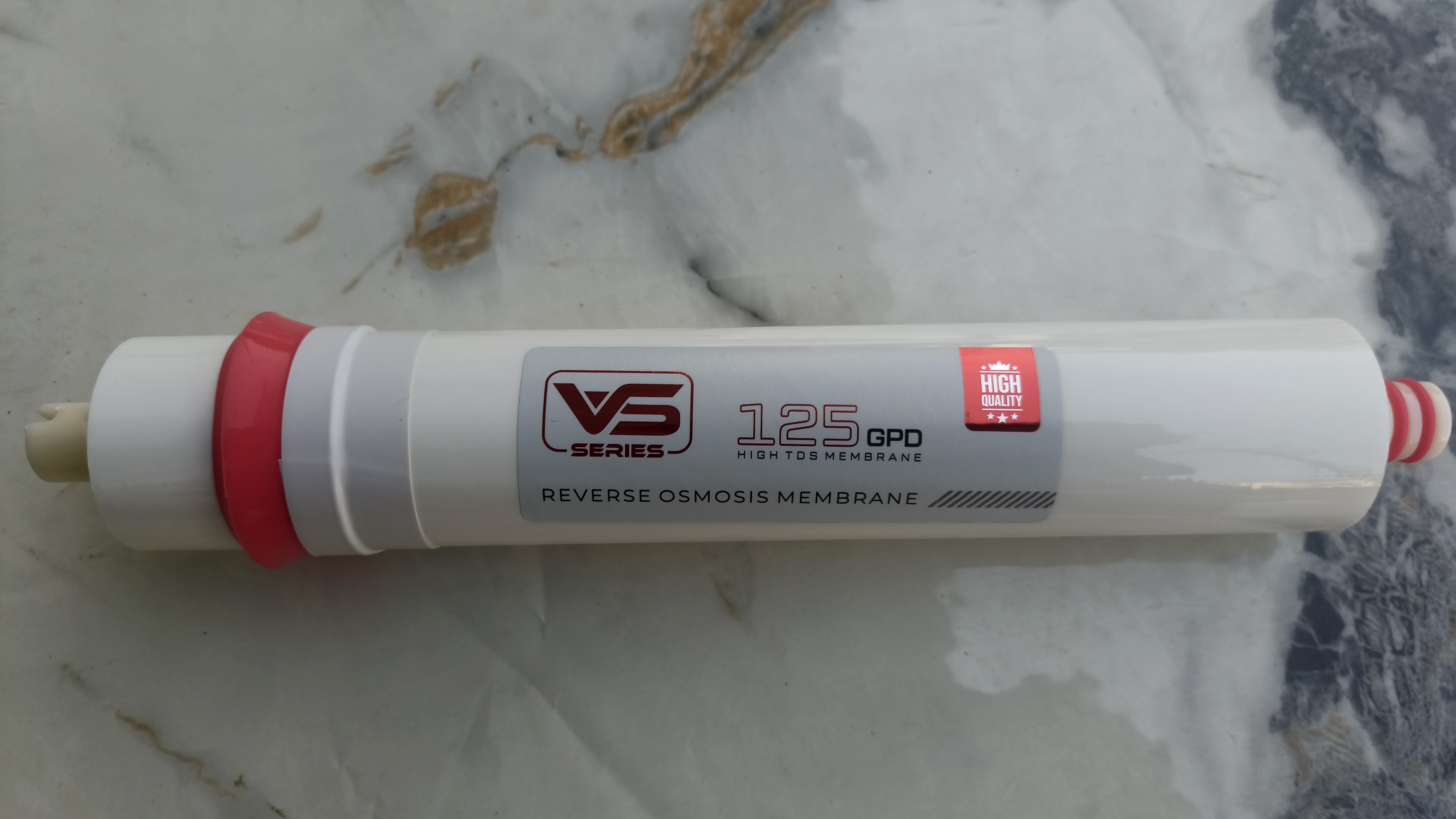
Look for the membrane model, rated production, required pressure, and stated feed-water limits in the manufacturer’s documentation. A cartridge that physically enters the housing may still have incompatible seals or an unsuitable operating range. If the label is missing, ask the system supplier to identify the correct replacement rather than selecting by appearance alone.
Understand what the production rating means
Membrane capacity is often expressed in gallons per day, or GPD, under specified test conditions. It does not mean the purifier will deliver that quantity in your kitchen. Temperature, feed pressure, dissolved-solids concentration, tank backpressure, and membrane condition influence actual output. Compare products using their published test conditions, not the headline number alone.
For example, a household with slow tank filling should not automatically replace a 75 GPD membrane with a higher-rated model. A clogged prefilter or weak feed pressure could be the real issue. A capacity change may also require a different flow restrictor and confirmation that the pump and housing are suitable.
Check the water and pretreatment
Use a recent water report or appropriate testing to understand the source water. Hardness, iron, sediment, disinfectants, and other contaminants can affect membrane life or require additional treatment. Many common thin-film composite membranes are sensitive to oxidants such as chlorine, so the specified carbon pretreatment matters. Chloramine treatment requires particular attention to carbon type and contact time.
A handheld TDS meter can help track dissolved-solids trends, but it does not identify individual contaminants or establish microbiological safety. If you are buying RO to address a specific health-related contaminant, look for independent certification covering that contaminant and the relevant complete system.
Match the surrounding components
Confirm the housing format, membrane seals, pump requirements, and flow-restrictor specification together. The restrictor controls concentrate flow; an unsuitable match can impair operation or encourage fouling. Do not select a restrictor using a generic ratio or internet chart when the purifier manufacturer provides a specific requirement.
For example, two membranes with the same nominal output may have different pressure specifications. Keeping the original pump is appropriate only if it supports the replacement membrane within the system’s approved configuration.
Install and verify cautiously
Follow the manufacturer’s flushing, sanitizing, and installation instructions. Use compatible seals and potable-water-approved lubricant only where directed. Never force a cartridge or improvise adapters inside a pressure housing. After installation, check for leaks, confirm normal tank filling, and discard initial water as instructed.
Record the installation date and baseline readings after the system stabilizes. Compare later performance with that baseline under similar conditions. If rejection deteriorates, investigate pretreatment, pressure, and seals before condemning the membrane. Where water safety is uncertain, use an appropriate alternative drinking supply until testing confirms the system is performing as intended.
Browse compatible parts
Browse the V Drop product catalogue and share your existing part label when asking about compatibility.