
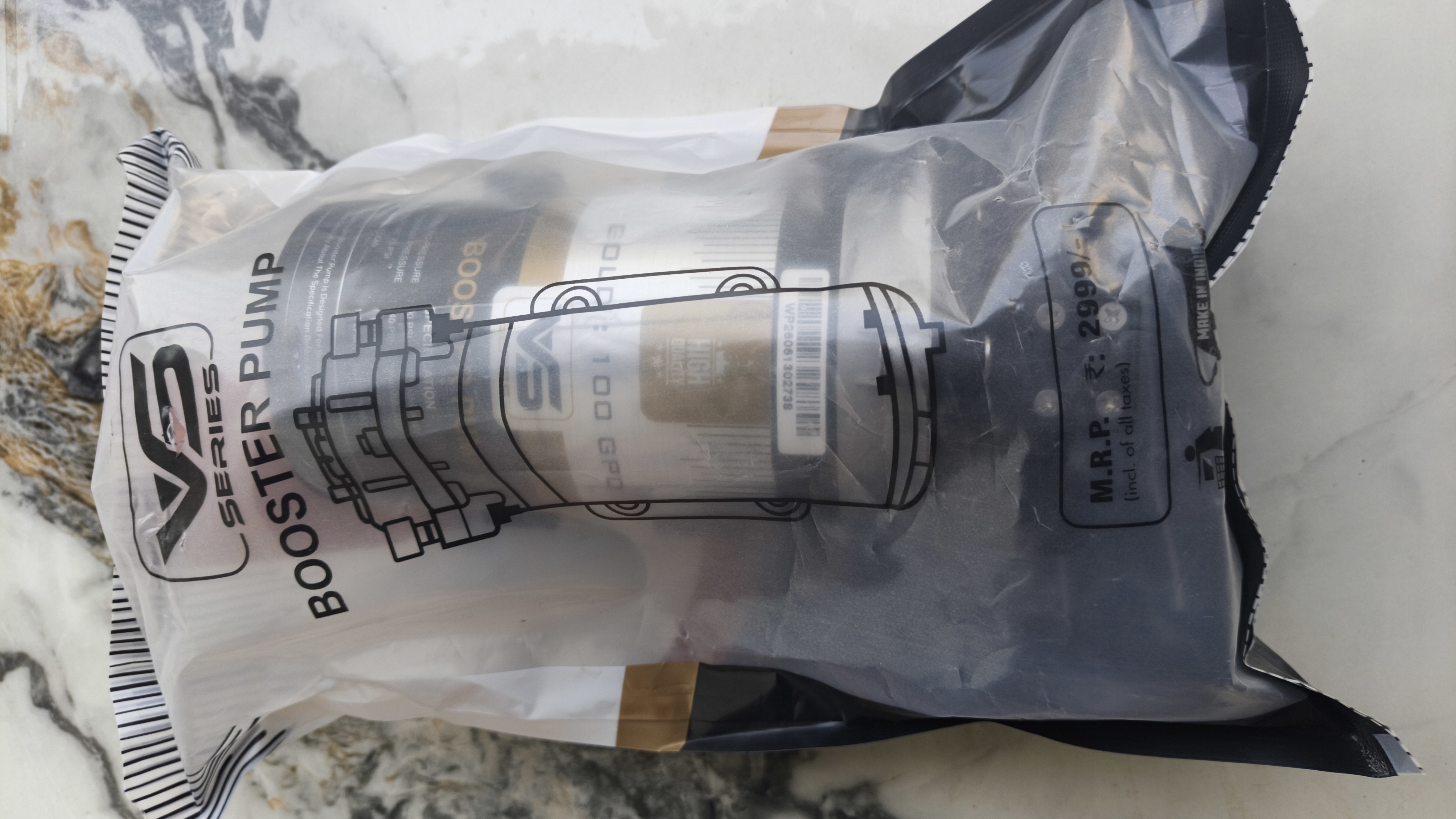
Identify the pump before shopping
An RO booster pump raises feed-water pressure so a compatible membrane can operate within its intended range. It is not the same as a delivery pump that sends stored water to an appliance or faucet. Similar-looking pumps can have different pressure curves, electrical requirements, and intended duties. Start by confirming what the existing pump does in your system.
Photograph its label, wiring connectors, mounting arrangement, and inlet and outlet connections. Record the purifier model and pump part number. If the label is unreadable, ask the manufacturer or a qualified service provider to identify the pump from the complete system rather than guessing from body size.
Read electrical details as a set
Check rated voltage, whether the supply is AC or DC, current requirements, and any stated duty limitations. A matching plug does not establish electrical compatibility. Polarity, connector dimensions, wiring assignment, and the power supply’s regulated output also matter. Never assume that every small RO pump uses the same voltage.
For example, a replacement advertised for a familiar membrane capacity may still require a different adapter. Using an underrated supply can cause unstable operation or overheating. Using the wrong voltage can damage the pump and other connected components. Do not test unidentified wires by briefly touching them to a power source.
Match hydraulic performance, not just a headline rating
A pump’s flow changes with pressure, so an unrestricted flow figure alone is not enough. Look for a performance curve or a manufacturer-approved system match. Confirm the required working pressure, permitted inlet conditions, and compatibility with the membrane, housings, valves, and tubing. The weakest pressure-rated component limits the assembly.
A more powerful pump is not automatically an upgrade. If a purifier already has sufficient pressure, a different pump may increase noise or stress components without solving the actual problem. Restricted prefilters, a closed valve, or poor feed supply should be investigated first.
Check connections, controls, and mounting
Confirm inlet and outlet orientation, thread standards, tubing dimensions, and fitting requirements. Threaded ports that look similar may not be interchangeable. Use the specified adapters rather than forcing an almost-fitting connector. Check that mounting holes and vibration isolators fit without pulling tubing sideways.
The pump must also work with the purifier’s pressure switches, solenoid valves, and control board. Some systems manage flushing and shutdown electronically. Never bypass a low-pressure switch to keep a pump running; it may be protecting against inadequate water supply. Pressure controls should be tested by someone familiar with the system.
Replace safely and verify operation
Before service, disconnect power, close the feed valve, and release trapped pressure according to the manual. Keep electrical connections dry and use potable-water-compatible wetted parts. Installation should not require modifying mains wiring; leave electrical repairs to a qualified professional.
After replacement, follow startup instructions, inspect connections for leaks, and confirm normal filling and automatic shutoff. Watch for persistent vibration, excessive heat, rapid cycling, or unusual noise. Stop the system if these appear. Retain the new pump’s label details and installation record so future diagnosis starts with a known specification rather than another guess.
Browse compatible parts
Browse the V Drop product catalogue and share your existing part label when asking about compatibility.